Thursday, May 28, 2020

Michael Flynn Was Not Masked because the FBI Framed Him as a Clandestine Agent of Russia | National Review

Michael Flynn Was Not Masked because the FBI Framed Him as a Clandestine Agent of Russia


Flynn Was Not Masked because the FBI Framed Him as a Clandestine Agent of Russia

Former National Security Adviser Michael Flynn departs after a plea hearing at U.S. District Court in Washington, D.C., December 1, 2017. (Joshua Roberts/Reuters)
The point of all this was politics, not national security. Well, the mystery is solved, at least if you can believe what the usual sieves — those courageously anonymous “former U.S. officials” — have told their notetakers at the Washington Post. As I surmised in last weekend’s column, Michael Flynn was not “unmasked” in connection with his controversial phone call with Russian ambassador Sergey Kislyak. He was never masked in the first place. The Post reported that on Wednesday afternoon.
Top articles1/5READ MORE Meanwhile, the Post is leading the media–Democrat effort to contort the fact that many Republicans were wrong in assuming Flynn had been unmasked prior to his name’s being leaked to the Post in early 2017 into a storyline that those Republicans must have been wrong to claim the leak was illegal. To the contrary, the leak is a felony, regardless of whether an American’s identity should have been concealed. Information collected under the Foreign Intelligence Surveillance Act (FISA) is classified. The point of classifying information is to keep all of it concealed, not just the names.
Though I was right that Flynn was never masked in connection with the Kislyak call on December 29, 2016, I was off the mark in hypothesizing that the conversation may be been intercepted by an intelligence agency other than the FBI — perhaps the CIA or a foreign intelligence service. Sadly, this owes to my giving the FBI the benefit of the doubt: Had Flynn been picked up on a FISA surveillance of which he was not the target (i.e., a surveillance of Kislyak), I reasoned that the FBI would have masked his identity under statutorily required “minimization instructions.” Indeed, we now know that Flynn’s identity was masked (and then unmasked) dozens of times before and after December 29, precisely because the government knew those minimization rules applied to him.
Alas, in this as in so much else throughout the Trump–Russia farce, the Bureau played fast and loose with the rules. When investigators are so inclined, it turns out the privacy vouchsafed by the minimization rules is illusory. FBI officials — if they thought about it at all — figured Flynn need not be masked because they did not see him as an innocent American incidentally caught up in foreign surveillance. They purported to suspect that he was a clandestine agent of Russia.
Of course, they had no proof of that. And they knew they had no proof. That’s why they never sought a FISA-court warrant targeting Flynn. Doing so would have required showing probable cause that he was an operative of Russia; and as to Flynn, they didn’t even have a fabulist “dossier” to rely on for such a smear.
In fact, by the time of the December 29 call, they’d already concluded there was such a dearth of evidence against Flynn that the Bureau needed to close the investigation they’d ludicrously opened against him four months earlier. I thus surmised that if it had been FBI agents who incidentally intercepted Flynn under FISA, they would have masked him, and thus there would have been an unmasking record (which there isn’t). This seemed especially so in light of former director Jim Comey’s strenuous claims in sworn testimony about how seriously the FBI takes it minimization duties. (“I also want to assure the committee that we take very seriously that obligation to protect U.S. persons’ privacy. This applies to all stages of the production of foreign intelligence, but I’d like to emphasize one area in particular; the dissemination of U.S. person information . . .”).
Watch: 1:00
Biden Named in List of Obama Officials Who Requested to ‘Unmask’ Flynn
According to the Post’s report this week, however, it was the FBI that intercepted the Flynn–Kislyak call. The Bureau decided not to mask Flynn before sharing the substance of the call with the Obama White House and other intelligence community components — including the Office of the Director of National Intelligence (ODNI) and the Justice Department. The Post’s revelation matches up with the meticulous reporting of the Daily Caller’s Chuck Ross, who points out that, in both his memoir and congressional testimony, the FBI’s former deputy director, Andy McCabe, indicated that the Bureau had intercepted Flynn conversation and had not masked him.
McCabe claims the Obama administration was taken aback when Russian dictator Vladimir Putin signaled that Russia would not retaliate after Obama imposed comparatively mild sanctions for election meddling on December 28. So, the story goes, our spy agencies were tasked to seek out intelligence about what drove this supposedly stunning decision. In the course of that digging, the FBI discovered the Flynn–Kislyak communications. Presumably, the Bureau had FISA surveillance coverage on Kislyak, who was probably at the Russian embassy in Washington. (I say this because the Bureau is responsible for FISA surveillance on foreign agents who are inside the United States. The Justice Department’s inspector general has concluded that there was no FISA warrant for Flynn, so we must assume Kislyak was the target. Had Kislyak been outside the U.S., the conversation with Flynn — who was in the Dominican Republic at the time — would likely have been captured by the NSA, not the FBI.)
For what it’s worth, I don’t buy McCabe’s story. Oh, I accept that the call was intercepted by the FBI, rather than the CIA, the NSA, or some foreign intelligence agency. At this point, there is no reason to doubt that the FBI captured the call and quickly disclosed Flynn’s identity to the “Obama advisers” with whom it was closely coordinating, as the New York Times reported.
What’s not believable is McCabe’s story about what prompted the FBI to dig up Flynn’s conversation and trumpet his identity. And this is not simply because McCabe is a notoriously suspect source. (Recall: McCabe was fired after the Obama-appointed DOJ inspector general found that he willfully misled investigators — multiple times, including under oath — in connection with a self-serving leak he had orchestrated and for which he had tried to shift suspicion to his fellow agents.)
The main problem here is that the story makes no sense — you know: The Obama administration, just three weeks away from leaving office, and after eight years of passivity in the face of the Kremlin’s lies and provocations, was suddenly so puzzled by Putin’s “no retaliation” announcement, and so worried about its possible national-security implications, that the White House felt compelled to investigate aggressively.
Gimme a break. No rational person would have assumed, just because Putin said Russia would not retaliate, that it would not make mischief at some opportune time. Putin is a former KGB agent and a despot who has gotten unimaginably rich by pilfering his country’s wealth. Lying is his business, and he does it more often than you change your socks. No competent intelligence pro takes what he says at face value. In those rare times when Moscow is not making trouble for us, it is scheming to make trouble for us — that’s a given.
Moreover, even if one suspended disbelief and took Putin’s assurance seriously, it was not an enforceable promise. Common sense would have told any savvy analyst that Putin simply did not think it was in Russia’s interest, at that moment, to ratchet up tensions with the United States. He wasn’t wounded by the new sanctions. They were completely consistent with Obama’s fecklessness, which, by then, Putin knew only too well. And in just three weeks, a new American president, who had cloyingly vowed to strive for good relations with Moscow, would be taking over. At most, Putin’s “no retaliation” blather was intended to exploit the burgeoning collusion narrative. He knew he could rely on the media–Democrat alliance to peddle “no retaliation” as more “proof” that Trump was in Putin’s pocket. That would sow more American discord and further undermine the new president’s capacity to govern — outcomes very much in Putin’s interests.
None of this is rocket science. For Obama officials to feign mystification over why Putin would not get spun up by Obama’s milquetoast sanctions is about as convincing as their precious concern that Flynn might be vulnerable to Russian blackmail over the Kislyak call — when Flynn had done nothing wrong and Russia knew our government had a recording.
We’re being had.
Here’s a more plausible explanation of motive. The Obama administration was actively constructing the Trump–Russia collusion narrative. Obama officials saw Putin’s “no retaliation” pose as an opportunity to float the fiction that the Kremlin had cut a sinister deal with Trump to gut Obama’s sanctions as a reward for Russia’s hacking of Democrats during the campaign. Obama officials and the FBI hoped to conceal the Trump–Russia investigation from the incoming Trump administration for as long as possible, and to continue the investigation of Trump’s campaign — remember, by December 29, they had already gotten a FISA warrant based on the representation that Trump’s campaign had conspired with the Kremlin, and they were preparing to reaffirm that claim in order to get a second 90-day warrant (the second of what would eventually be four).
The Flynn–Kislyak call was intercepted because the FBI had FISA coverage on Kislyak, and both the Bureau and the Obama White House instantly recognized that hyping the call could advance all these objectives. Then, they really hit the jackpot: Even though Flynn had done nothing wrong, Trump officials amateurishly misled the public about the call — claiming that Obama’s sanctions were not discussed, rather than that the topic came up but Flynn made no concessions to Moscow. This, naturally, stoked a few “Flynn discussed the sanctions, then lied” news cycles. These amplified the frenzy over publication of the Steele dossier — choreographed by Obama-administration leaks about the Russia briefing our intelligence agencies gave Trump. Flynn’s days were numbered. By Valentine’s Day, he was cashiered as national-security advisor . . . no longer an obstacle to the Obama-driven strategy of continuing the Trump–Russia investigation after Trump took office.
The point of all this was politics, not national security. It therefore makes perfect sense that Flynn’s name would not have been masked. And the fact is, once you look at the fine print, the decision not to mask Flynn’s name is easier to justify than other decisions the FBI was making at the time — e.g., to open a counterintelligence investigation on the theory that Flynn was an operative of Russia; to seek FISA warrants based on uncorroborated rumors peddled by agents of the Clinton campaign; to misrepresent to the FISA court that evidence had been verified and the main informant was reliable; and so on.
The intelligence community tells Americans it deeply respects their privacy and realizes that collecting information about them — under the guise of monitoring foreign actors — is something that can only be justified by national-security needs and strict adherence to privacy guidelines. To impress its sincerity on us, the ODNI maintains what it portentously calls its “Office of Civil Liberties, Privacy, and Transparency.” In late 2017, that office even published a pamphlet called: “Protecting U.S. Person Identities in Disseminations under the Foreign Intelligence Surveillance Act.”
It is sweet-sounding twaddle. Sure, American identities are masked the majority of the time. On close reading, though, our intelligence agencies reserve the discretion to unmask pretty much whenever they wish. For all the talk, talk, talk about privacy, the pamphlet explains:
As a general matter, a U.S. person’s actual identity may be included in an intelligence report at the time it is first prepared and disseminated if such inclusion meets the agency’s minimization standard (e.g., whether the identity is foreign intelligence, necessary to understand foreign intelligence or assess its importance, or is evidence of a crime).
Notice that this guideline makes it the agency’s subjective call whether to mask a U.S. person’s identity. So, for example, even if the FBI has no actual evidence that Mike Flynn is a clandestine foreign agent — in fact, even if the Bureau has already decided to close a counterintelligence case on Flynn — it need not mask his name if it decides its baseless suspicion is reason enough to claim that Flynn’s conversations constitute “foreign intelligence.”
Or even if the FBI knows Flynn’s job as incoming national-security advisor is to consult with foreign counterparts, and even if the FBI knows Flynn has said nothing improper in his conversation with Kislyak, the Bureau is free to claim that Flynn’s name must be revealed in order to “assess the importance” of his conversations with Russia’s ambassador — something that is not done to other U.S. officials whose job is to consult with foreign emissaries, because the FBI knows it has no business monitoring the conduct of American foreign policy.
Or if the FBI decides a conversation may be “evidence of a crime,” it need not mask a U.S. person’s name — even if the only conceivable crime is a violation of the Logan Act, which the Justice Department has never prosecuted in its 150-year history, which has not been invoked since before the Civil War, and which is so widely seen as unconstitutional that no one has ever been convicted of it since its enactment in 1799.
Feel better now?
  • Did Obama Expand NSA Surveillance Power so Trump Couldn't Go Further?

    Did Obama Expand NSA Surveillance Power so Trump Couldn't Go Further? 

    Why Is Obama Expanding Surveillance Powers Right Before He Leaves Office?


    The Obama administration made it easier for the NSA to share information with other intelligence agencies, just weeks before the inauguration.Jonathan Ernst / Reuters
    On Thursday, the Obama administration finalized new rules that allow the National Security Agency to share information it gleans from its vast international surveillance apparatus with the 16 other agencies that make up the U.S. intelligence community.
    With the new changes, which were long in the works, those agencies can apply for access to various feeds of raw, undoctored NSA intelligence. Analysts will then be able to sift through the contents of those feeds as they see fit, before implementing required privacy protections. Previously, the NSA applied those privacy protections itself, before forwarding select pieces of information to agencies that might need to see them.The updated procedures will multiply the number of intelligence analysts who have access to NSA surveillance, which is captured in large quantities and often isn’t subject to warrant requirements. The changes rankled privacy advocates, who oppose a broadening of surveillance powers—especially on the cusp of Donald Trump’s inauguration. Trump and Mike Pompeo, the president-elect’s nominee for CIA director, have made it clear that they think overzealous civil-liberties protections should be cleared away in favor of stronger surveillance laws.
    But while the changes may subject more Americans to warrantless surveillance, the last-minute timing of the announcement actually might have been designed to cut future privacy losses. Susan Hennessey, a Brookings fellow and the managing editor of Lawfare, says firming up the changes before Trump takes office makes it harder for the incoming president to encroach even further on civil liberties.
    I spoke with Hennessey, who was previously an attorney in the NSA general counsel’s office, about the lasting effects of the new intelligence-sharing procedures. A transcript of our conversation follows, lightly edited for clarity and concision.

    Kaveh Waddell: First off, what do these changes mean for the intelligence community? Has a lack of information-sharing among agencies been holding back investigations?
    Susan Hennessey: The origin of these changes dates back, honestly, to just after 9/11. There was this identified issue of “stovepiping”: Intelligence wasn’t being shared frequently or fast enough. Some modifications have already been made throughout the years.
    Under Executive Order 12333 as it previously existed, NSA analysts had to make an initial determination and apply a set of privacy rules before sharing raw signals-intelligence information with other parts of the intelligence community. After this change, it doesn’t necessarily have to be an NSA analyst that makes that determination—that information can be shared with other parts of the intelligence community.
    So it doesn’t change the substantive rules, it doesn’t change the scope of collection, it doesn’t change the types of protection, it doesn’t change the possible uses; it essentially just broadens the group of people who can apply those protections to the raw intelligence.
    Waddell: And by extension, it broadens the group of people who get to see raw intelligence, before those rules are applied?
    Hennessey: Yes. This is something that has been at the forefront of privacy and civil-liberties advocates’ minds when they’ve expressed concern with this type of collection. But it’s not accurate to say the rule change means it’s a raw signals-intelligence free-for-all, that anybody can get signals intelligence.
    Intelligence agencies other than the NSA will have to provide justification for why they need access to that data. It can only be for foreign intelligence, or other enumerated purposes. So it’s not that those agencies will just be able to see whatever they want—it’s that they will be able to request, with particular justifications, access to more raw signals intelligence than they had before. Then, they will need to apply those minimization procedures for themselves.
    The civil-liberties concern often surrounds the use of incidentally collected information. Under the new rule, the FBI could not obtain access to or search raw intelligence information for ordinary criminals in an ordinary criminal investigation against a U.S. person. However, if the FBI incidentally seized evidence of a crime, they are allowed to use that information. So that tends to be where the tension is for people who are concerned with the potential impacts that this change could have on U.S. persons.
    Waddell: The fact that more Americans could potentially be subject to warrantless searches, just by virtue of being caught up in the raw signals intelligence that’s shared—is that something that concerns you?
    Hennessey: No. Look, I think it’s important to understand that these minimization procedures are taken very seriously, and all other agencies that are handling raw signals intelligence are essentially going to have to import these very complex oversight and compliance mechanisms that currently exist at the NSA.
    Within the NSA, those are extremely strong and protective mechanisms. I think people should feel reassured that the rules cannot be violated—certainly not without it coming to the attention of oversight and compliance bodies. I am confident that all of the agencies in the U.S. intelligence community will discharge those very same obligations with the same level of diligence and rigor, adhering to both the spirit and the letter of the law.
    That said, there are potentially broader reforms that might be undertaken. I don’t think that they necessarily need to be linked to the sharing of data. But it’s reasonable to at least engage in a conversation about whether or not it’s appropriate to have particular post-collection reforms, like for example imposing an obligation for law enforcement to obtain a warrant in particular circumstances.
    That’s a long way of saying that nothing about this particular rule change exposing Americans to additional privacy risks. However, that doesn’t mean that there are not still reasonable and responsible reforms which might take place.
    Waddell: I found it interesting that you said the change could, in one way, actually be viewed as a “huge source of comfort.” I think you were referring to the timing of the change. Why is that?
    Hennessey: These changes have actually been in process for eight or nine years. One of the things that I think individuals who had insight into intelligence activities and were concerned about the election of Donald Trump—specifically, some of the statements he’s made about adherence to the rule of law—a lot of those people’s minds went very quickly to these procedures.
    It’s important to understand the distinction between Executive Order 12333 and the Foreign Intelligence Surveillance Act: One very oversimplified way to think about it is that FISA is a statute that governs collection that takes place within the United States, but that is aimed at a foreign target; 12333 collection is aimed at a foreign target, and takes place outside the United States. That’s shorthand that glosses over some technical and legal nuance, but those are the broad buckets people should be thinking about.
    FISA is a statute, so you’d need congressional action to change those rules, and you have a built-in check there. But 12333 is not constrained by statute; it’s constrained by executive order. In theory, a president could change an executive order—that’s within his constitutional power. It’s not as easy as just a pen stroke, but it’s theoretically possible.
    Executive Order 12333 requires that this series of protective procedures exist and are adhered to. The procedures are kind of where the rubber meets the road on privacy. They’re the details, the nitty-gritty: What can you actually see? What can you share? What do you have to minimize? So they’re really, really important in terms of what the relationship between U.S. citizens and the intelligence community looks like.
    When they were in rewrites, they were sort of vulnerable. There was the possibility that an incoming administration would say, “Hey! While you’re in the process of rewriting, let’s go ahead and adjust some of the domestic protections.” And I think a reasonable observer might assume that while the protections the Obama administration was interested in putting into place increased privacy protections—or at the very least did not reduce them—that the incoming administration has indicated that they are less inclined to be less protective of privacy and civil liberties. So I think it is a good sign that these procedures have been finalized, in part because it’s so hard to change procedures once they’re finalized.
    Waddell: Is that why we just went through an eight- or nine-year process to get here?
    Hennessey: Exactly. For questions both of genuine complexity and just government bureaucracy, the time horizon here is longer than a single term of the presidency.
    So I don’t think that it’s necessarily true that the intelligence community or the Department of Justice was rushing to get these procedures passed; if anything, they’re a little bit late. But I think the bottom line is that it’s comforting to a large national-security community that these are procedures that are signed off by Director of National Intelligence James Clapper and Attorney General Loretta Lynch, and not by the DNI and attorney general that will ultimately be confirmed under the Trump Administration.
    Waddell: Is there anything else we should be thinking about with these new changes?
    Hennessey: People sometimes focus on the top-line stuff and end up missing the things that aren’t necessarily the symbolic expressions of privacy—the things that make us feel good—but are the functional elements of privacy and civil liberties. What rules do people apply day-to-day and how? There’s going to be a need moving forward to have disciplined conversations about the legal protections that really matter.
    If there is a silver lining to some of the anxieties that the incoming administration has produced, I think it’s the potential to move the conversation into a much more productive place. But that opportunity will end up being lost if the responses are the same old same. That’s my last shred of optimism, and I’m hanging on to it.

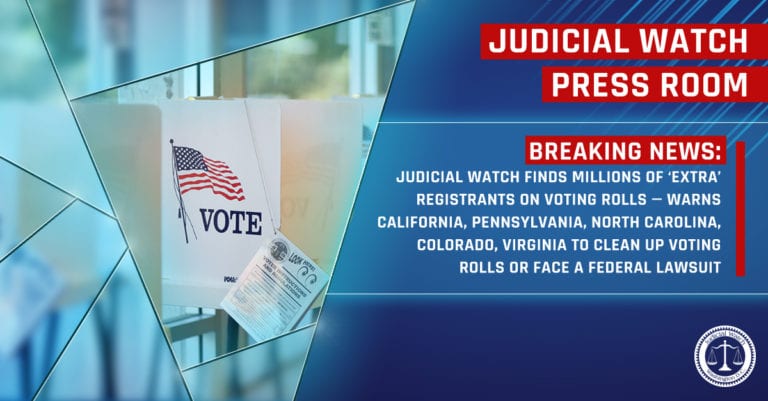
    Five States Face Federal Lawsuit Over Inaccurate Voter Registrations

    Five States Face Federal Lawsuit Over Inaccurate Voter Registrations

    January 07, 2020
    Five States Face Federal Lawsuit Over Inaccurate Voter Registrations
    AP Photo/John Minchillo, File
    In 378 U.S. counties, voter registration rates exceed 100% of the adult population, meaning there are more voter registrations on file than the total voting-age population, according to a new analysis by the conservative watchdog group Judicial Watch. 
    Based on data the federal Electoral Assistance Commission released last year, the new analysis indicates that a minimum of 2.5 million voter registrations are wrongly listed as valid. It suggests widespread lack of compliance with the National Voter Registration Act (NVRA), which requires states to remove people who have died, moved, or are otherwise ineligible to vote from the rolls. While having excess registrations isn’t proof of voter fraud, voter integrity advocates note that it does create opportunities for deception, such as allowing people to vote twice in different precincts or submit invalid absentee ballots. 
    Last week, Judicial Watch sent letters to election officials in 19 counties in five states – California, Colorado, North Carolina, Pennsylvania, and Virginia – warning that they could face a federal lawsuit for their failure to update voter rolls. 
    Eleven of the 19 counties are located in California, which has had habitual problems updating its voter rolls. Last year, Los Angeles County settled a lawsuit and agreed to clean up its voter rolls after Judicial Watch revealed that it had 1.6 million more voter registrations on file than the eligible voting population in the county. As of last year, the entire state of California had a voter registration rate of 101%.  
    It doesn’t appear that California counties have fixed the problem. San Diego County removed 500,000 voter registrations from its rolls last year following Los Angeles’ settlement, but according to Judicial Watch’s analysis of federal data, San Diego still has a registration rate of 117% – one of the highest in the country. 
    While the majority of the 19 counties singled out by Judicial Watch have voter registration rates exceeding 100%, some have voter registration rates exceeding 90%, which is improbably high if not impossible. But in every county, Judicial Watch asserts that there’s a demonstrable failure to keep voter rolls accurate. 
    The four counties singled out by Judicial Watch in Pennsylvania – Allegheny, Chester, Bucks, and Delaware – have voter registration rates ranging between 96% and 98%. Judicial Watch notes that the number of voter registrations removed from the rolls in each county the previous two-year period is 72, eight, five, and four, respectively. 
    “If few or no voters were removed . . . the jurisdiction is obviously failing to comply. . . . States must report the number of such removals to the [Electoral Assistance Commission],” said Robert Popper, former deputy chief of the Voting Section in the Civil Rights Division of the Department of Justice, who now works on voting issues for Judicial Watch, in a press release.
    With more than 1.2 million residents, Allegheny County is the second most populous in Pennsylvania. Invalidating only 72 voter registrations is “an absurdly low figure for a county of this size,” notes Judicial Watch’s letter to the Allegheny County Council and the Pennsylvania secretary of state. “If this figure is accurate, it establishes beyond any dispute that the County is not complying with the NVRA.” Census data confirms that more than one in 10 Americans move every year, and there were obviously more than 72 deaths in the Pittsburgh area over the last two-years. 
    Another issue raised by Judicial Watch is the number of inactive registrations, such as when a voter hasn’t voted in successive elections or has failed to respond to state inquiries asking them to confirm their address and otherwise validate their registration. 
    In its letter to Orange County, California Judicial Watch notes that the county has a voter registration rate of 96%. However, Judicial Watch’s letter notes that there are about 380,000 inactive voter registrations on the county’s rolls, or about one in every five registrations – another strong indication that the voting rolls aren’t being systemically updated. (Additionally, Orange County,  with a population of 3.2 million, has the distinction of reporting that it did not remove a single voter registration from its rolls over the previous two years.) 
    The issue of cleaning up voter rolls has become acute over the last year in part due to a 2018 Supreme Court decision, Husted v. A. Philip Randolph Institute. While the decision upheld the state of Ohio’s specific provisions for determining which voter registrations are inactive or invalid, the high court’s decision also clarified the intent of the NVRA’s provisions to keep voter rolls accurate. 
    Previously some states had relied on questionable interpretations of the law to avoid cleaning up voter rolls. In 1998, California got authority from Clinton administration Attorney General Janet Reno to reinterpret the NVRA enforcement provisions, an interpretation that the Supreme Court determined was a misreading of the law in Husted.
    Partisan considerations aside, one factor in the sorry state of America’s voter rolls is the cost. Last year after Judicial Watch also threatened a federal  lawsuit over Kentucky’s inability to keep accurate voter rolls, the office of Kentucky Secretary of State Alison Lundergan Grimes blamed a lack of “proper funding” and “budget shortfalls” for why the state had fallen behind. 
    The upshot is that after decades of neglect, hundreds of counties in this country have millions upon millions of inaccurate voter registrations – and the problem is widespread in Republican “red” and Democratic “blue” counties alike. Some critics see legal action by the judiciary as the best way to force the legislative and executive branches of government to do their duty to ensure the integrity of the nation’s elections process. Judicial Watch says its decision to send letters to five states representing a small fraction of the 378 counties in apparent violation of federal law may only be a first step in its efforts to clean up voter rolls in the coming year.   
    “The litigation is complex so filing five lawsuits would be significant,” Judicial Watch President Tom Fitton told RealClearPolitics. “The other counties are also on our radar and will not escape scrutiny.” 

    Judicial Watch Finds Millions of ‘Extra’ Registrants on Voting Rolls

    Judicial Watch Finds Millions of ‘Extra’ Registrants on Voting Rolls – Warns California, Pennsylvania, North Carolina, Colorado, Virginia to Clean Up Voting Rolls or Face a Federal Lawsuit

    At Least 2.5 Million Extra Names on Voting Rolls, Drop of One Million After Successful Judicial Watch Lawsuits
    (Washington, DC) – Judicial Watch announced today it is continuing its efforts to force states and counties across the nation to comply with the National Voter Registration Act of 1993 (NVRA), by sending notice-of-violation letters to 19 large counties in five states that it intends to sue unless the jurisdictions take steps to comply with the law and remove ineligible voter registrations within 90 days. Section 8 of the National Voter Registration Act requires jurisdictions to take reasonable efforts to remove ineligible registrations from its rolls.
    Despite successful litigation by Judicial Watch to bring counties and states into compliance with the National Voter Registration Act, voter registration lists across the country remain significantly out of date. According to Judicial Watch’s analysis of data released by the U.S. Election Assistance Commission (EAC) this year, there are 378 counties nationwide that have more voter registrations than citizens living there and old enough to vote, i.e., counties where registration rates exceed 100%. These 378 counties combined had about 2.5 million registrations over the 100%-registered mark, which is a drop of about one million from Judicial Watch’s previous analysis of voter registration data. Although San Diego County removed 500,000 inactive names from voter rolls following Judicial Watch’s settlement with Los Angeles County, San Diego still has a registration rate of 117% and has one of the highest registration rates in the country.
    In the latest round of warning letters, Judicial Watch explains that implausibly high registration rates raise legal concerns:
    An unusually high registration rate suggests that a jurisdiction is not removing voters who have died or who have moved elsewhere, as required by [federal law].
    Judicial Watch also considers how many registrations were ultimately removed from the voter rolls because a registrant [had moved]. If few or no voters were removed…the jurisdiction is obviously failing to comply . . . States must report the number of such removals to the EAC.
    Judicial Watch found major voting list issues in California, Pennsylvania, North Carolina, Virginia, and Colorado. The following counties have excessive registration rates or have failed to cancel sufficient numbers of ineligible registrations:
    Colorado
    Jefferson County
    California
    Imperial County
    Monterey County
    Orange County
    Riverside County
    San Diego County
    San Francisco County
    San Mateo County
    Santa Clara County
    Solano County
    Stanislaus County
    Yolo County
    North Carolina
    Guilford County
    Mecklenburg County
    Virginia
    Fairfax County
    Pennsylvania
    Allegheny County
    Bucks County
    Chester County
    Delaware County
    “Dirty voting rolls can mean dirty elections and Judicial Watch will insist, in court if necessary, that states follow federal law to clean up their voting rolls,” said Judicial Watch President Tom Fitton. “Previous Judicial Watch lawsuits have already led to major cleanups in California, Kentucky, Indiana, and Ohio – but more needs to be done. It is common sense that voters who die or move away be removed from the voting rolls.”
    Judicial Watch is the national leader in enforcing the National Voters Registration Act, which requires states to take reasonable steps to clean their voting rolls.
    In 2018, the Supreme Court upheld a massive voter roll clean up that resulted from a Judicial Watch settlement of a federal lawsuit with Ohio.
    California also settled a similar lawsuit with Judicial Watch that last year began the process of removing up to 1.5 million “inactive” names from Los Angeles County voting rolls. Kentucky also began a cleanup of up to 250,00 names last year after it entered into a consent decree to end another Judicial Watch lawsuit.
    Judicial Watch Attorney Robert Popper is the director of Judicial Watch’s Election Integrity initiative.

    The Real Donal Trump


     The Real Donal Trump


    "I love when people call Trump Stupid..
    You mean the multi-billionaire who kicked every Democrats butt, buried 16 career Republican politicians, and continues to make fools out of once reputable news organizations ..
    You mean the guy who won the presidency?
    You mean the guy with the super model wife?
    You mean the guy whose words alone put a massive slow down on illegal border crossings?
    You mean the guy whose mere presence made the stock market smash its previous records?
    You mean the guy who created 1 million jobs in his first 7 months in office?
    Are you sure you even know what it is you're resisting?
    Are you sure you back a party that enables the decimation of every core principal of Christianity?
    Are you sure you back a party that voted 100% against the abolition of slavery?
    Are you sure you really take a politician like Maxine Waters seriously?
    Are you sure you don't see anything wrong with someone who has a 40 yr career as a public servant living in a $4.5 mansion representing a district she doesn't even live in?
    Are you sure you see nothing wrong or peculiar about Hillary Clinton a woman being involved in politics for the last 30 yrs having a net worth of $240 million?
    Are you sure you're not just basing your opinion on hatred spewed by a crooked paid for media platform?
    Could you even tell me 5 things the Democratic Party has done to improve you're day to day prosperity as a hard working American citizen?
    Probably not..
    Do you realize the debacle you are sending your children into once they become adults by continuing to support a political party that has done nothing for the poor except kept them poor, gave them free abortions, and a few hundred a month to keep food in their fridge?
    The prosperity and safety of its citizens is job one of your government.
    Get with the program.
    Everyone else has horribly failed you!
    Smarten up and take a position for the sake of your children.
    I promise you a country full of illegal immigrants, abortions, $15 an hour jobs, and non-gender specific people aren't gonna make your country and life any more prosperous.
    Rosie, Madonna, Katy Perry, and Robert Deniro are not just like you. They don't have to live through the real world day to day disparity of an average American.
    Men don't hate women, white people don't hate black people, and Donald Trump is not a racist.
    Stop allowing yourself to be brainwashed by a party that has continuously failed you.
    Be about your prosperity, your safety, your children, and an America First mindset.
    Dump these crooked politicians that have stunted your growth.
    Dump these crooked politicians that have stunted your children's growth.
    Toughen up, take a stand, and act like a proud American.
    See the spirit of Trump supporting and freedom loving Americans and just imagine where we could be as a country if everyone had the same priorities”

    Wednesday, May 27, 2020

    Trump admin slaps solar, wind operators with retroactive rent bills

    (Reuters) - The Trump administration has ended a two-year rent holiday for solar and wind projects operating on federal lands, handing them whopping retroactive bills at a time the industry is struggling with the fallout of the coronavirus outbreak, according to company officials.
    The move represents a multi-million-dollar hit to an industry that has already seen installation projects canceled or delayed by the global health crisis, which has cut investment and dimmed the demand outlook for power.
    It also clashes with broader government efforts in the United States to shield companies from the worst of the economic turmoil through federal loans, waived fees, tax breaks and trimmed regulatory enforcement.
    U.S. power plant owner Avangrid Inc (AGR.N), majority owned by Spain’s Iberdrola (IBE.MC), received a bill for more than $3 million for two years of rent on its 131-megawatt Tule wind project on federal land near San Diego, according to spokesman Paul Copleman.
    Officials at two other renewable projects also confirmed they had received retroactive rent bills from the federal government but asked not to be named discussing the issue as the industry continues to lobby the government for support to weather the downturn.
    Some 96 utility-scale solar, wind and geothermal projects operate on lands run by the Interior Department’s Bureau of Land Management, according to The Wilderness Society and Yale Center for Business and the Environment.
    The bills came as a surprise, said Shannon Eddy, executive director of the Large-scale Solar Association, a trade group for owners of big solar farms. But she said some companies had likely set funds aside in case the bills ever came.
    The Interior Department had stopped charging the rents at the end of 2018 to review company complaints that former President Barack Obama’s administration had increased them too much, making them uncompetitive with rents on private property.
    The Interior Department declined repeated requests to comment on the outcome of that review, or the issuance of the retroactive rent bills.
    A budget document on the Interior Department’s web site shows it expects to collect $50 million in rent fees for wind and solar projects in 2020, up from $1.1 million in 2019 and $21.6 million in 2018.
    The rent bills landed around the same time the Bureau of Land Management notified oil and gas drillers on federal lands of the procedures they would need to follow to get relief from paying royalties amid an oil market slump.
    The administration has also expanded the drilling industry’s access to economy-wide government lending facilities and is contemplating ways to pump additional billions of dollars into the sector through tax breaks.
    The Nuclear Regulatory Commission, meanwhile, recently agreed to a 90-day fee deferral for nuclear power plant owners due to economic disruptions caused by the pandemic.
    Renewable companies are also facing significant headwinds from the coronavirus. Project delays have threatened their ability to tap lucrative federal subsidies needed to compete with fossil fuels and cut the growth outlook for U.S. wind and solar installations by 5% and 10%, respectively, this year, according to the Energy Information Administration.
    The industry likes to site its projects on federal lands, particularly near large Western population centers such as Southern California, because they offer ample undeveloped space.
    Other owners of wind and solar projects on BLM lands include NextEra Energy Inc (NEE.N), NRG Energy Inc (NRG.N), Clearway Energy Inc (CWENa.N) and Southern Co (SO.N).
    Officials from NRG, Clearway and Southern declined to comment and NextEra did not reply to requests for comment.
    BLM increased the annual amounts renewable energy companies pay in rent during the final weeks of the Obama administration. The rents are calculated based on acreage, as well as the amount of power and the type of technology being used to generate it.
    Many Western lawmakers, including Wyoming Senator John Barrasso and Alaska Senator Lisa Murkowski, both Republicans, have sided with the wind and solar industries in opposing the higher rents.

    Top 5 ways Democrats plan to STEAL the 2020 POTUS election using mail-in ballots

    Top 5 ways Democrats plan to STEAL the 2020 POTUS election using mail-in ballots 

    Top 5 ways Democrats plan to STEAL the 2020 POTUS election using mail-in ballots


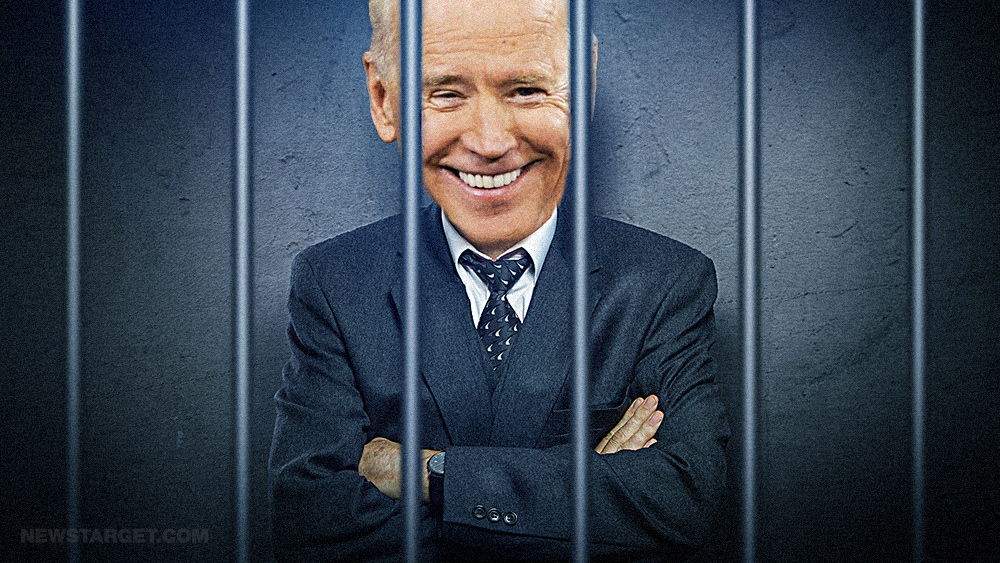
    Image: Top 5 ways Democrats plan to STEAL the 2020 POTUS election using mail-in ballots
    (Natural News) Joe Biden may be the most pathetic U.S. Presidential candidate in history, and that’s saying a lot following two Hillary Clinton failed attempts. There’s simply no way for the Democrats to win the states where Trump won all of those electoral college votes that won him the election in a landslide in 2016 – unless … wait for it … they cheat like the cheating scoundrels they are.
    Creepy Joe talks about really creepy stuff on the campaign trail, like how much he loves kids rubbing the hairs on his legs in the swimming pool, and how he knows about roaches, and how he can relate to Black people because he was once a lifeguard who took a six foot chain (and some razor blades he sharpened on the curb – you know, “the thing”) and threatened to wrap that chain around the neck of a black gangster named Corn Pop. You can’t make this stuff up.
    Biden has all the qualities of a pedophile, rubbing on girl’s shoulders and sniffing their hair in public, during photo shoots, like he’s too big to fail. Maybe he’s just too stupid not to fail. Well, we will all know the answer to that in a few months. Watch the pedophile freak in action and remember, this guy wants to be the leader of the not-so-free world, soon. Maybe he’s sniffing for the coronavirus cure?
    There’s no way a violent, embezzling, dementia-suffering pedophile could legitimately win the White House in November, unless of course, the whole thing gets rigged by mail-in votes. Folks, now you know what the lockdown is really all about. Get ready, because here it comes:

    Top 5 ways Democrats plan to STEAL the November presidential election using vote-by-mail ballots  

    1. No voter I.D. required, so anybody can vote, whether you’re an illegal alien, dead, or you already voted in another state.
    2. George Soros already has people in place at the voting precincts (think Democrats who are Judges of Elections here) ready to throw away millions of Republican votes while keeping all the Dems (like they did in Gainesville, Florida in 2016, when they got caught driving truckloads back to the office from storage, after they “thought” they lost them – it’s called “canvassing”).
    3. The Democrat states can all stay on lockdown to crash Trump’s economy while mailing ballots to everyone who will vote for free income forever.
    4. Social distance lines of 6 foot spacing are happening at every corporate store that’s open, so why can’t there be social distancing for lines at voting precincts? Because Democrats are planning to create millions of illegal ballots that anyone can sign in order to “stuff the ballot boxes.”
    5. There’s no accountability on mail-in ballots at all, anywhere! No social security number, license number, green card number, serial number, nothing printed on the “official ballot” but some names to vote for by filling in a little black circle and mailing it in. There’s absolutely no verifying how many of these might be mailed to each person/household.

    Democrats are notorious for engaging in election tampering by massive voter fraud and vote theft, just take a look at Florida in 2016 and 2018

    We all remember when Democrat-saturated counties in Florida, Palm Beach and Broward, out of the blue found thousands of “additional ballots” back in 2016. Democrat operatives at those precincts were caught on video, after voting deadlines had passed (nearly 2 days later), driving moving trucks full of “lost ballots” back to the office, after they had dumped all the Republican ones.
    Thousands of magical votes kept coming in, mostly during the overnight hours, that chipped away GOP leads, until the Democrats finally cheated their way into office. The Broward county supervisor and their elections department literally have a history of breaking the law. Obama never cracked down on any of it, because it all helped the damned Dems, and the fraud was nearly all vote-by-mail driven. The court even found that they had destroyed ballots in 2016, thus violating federal and state laws.
    Tune your internet dial to Preparedness.news daily, because let’s face it, it’s not a matter of “if” the SHTF, it’s when will the SHTF, and you better be ready. Ain’t nobody making fun of people who stock up on food, ammo and toilet paper anymore, huh?